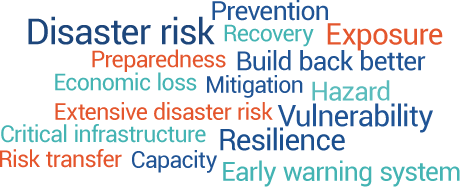
When a hazard event (such as a drought, flood, cyclone, earthquake or tsunami – among others) occurs, triggering a loss of life and damage to infrastructure, it highlights the reality that society and its assets are vulnerable to such events. When discussing disaster risk management, a disaster can highlight the following in a community:
- The geographical area where the community is settled is exposed to such a hazard;
- The society (including individuals) and its infrastructure, assets and other processes – as well as services which may have experienced damage or destruction – are vulnerable.
NSTP activity was given to us to do the following:
- Analyze the current disaster situation, preparedness & management of your community.
- Gain knowledge and skills in assessing capacities and vulnerabilities of your own community.
- Coordinate and interact with your community/barangay to establish to establish cognizance of their Disaster Risk Reduction and Management Plan

I may already failed to do this activity since this is my first time studying here in the Philippines and I am staying at a condominium. So I was not prepared for this kind of activities. I grow up in the Middle East with my parents, who are OFW, and my relatives stays in a subdivision, so i do not know how to accomplish this activity. So, I came up an idea to talk with my grandmother who stayed at the subdivision for a long time and may have first hand experiences with disasters happened there. You may be asking why my grandmother, because there are times where my grandmother act as the community chair women were as she conduct meetings and activities that helps improves the community. That is what I observed during my yearly vacation in my grandparents place.
The downfall of this sort of activity I am doing is that I do not have photo evidence of the hazards, vulnerability, capacity, and safe places of the community.
Sacred Heart Subdivision, Abucay Bataan
Sacred Heart Subdivision is where my grandmother stays at. The subdivision is a small community reaching about 30 families or less. The first talk my grandmother talks about a disaster that may cause high risk in the community is the Earthquake. The community is standing on a small-soft hill, where as the main highway of the road is on top of the hill the rest of the community houses goes along the slope of the hill. Just one huge hit of earthquake can make those houses comes down quickly to the rest of the houses down hill. Next problem she discuss is the garbage that builds up along the highway. There were days where the trash collect fails to collect the community garbage. Resulting to bad odors going around the community that may cause health issues to younger individuals. The other problem along this situation she talks about is that those garbage may be clogged the sewage, resulting to flood and more bad odors. Typhoon is heaviest damage that can happen in the community. Some street light are not properly fixed in position, it may due to high winds during typhoon and not being replaced or repaired, other is that the community is in a huge open area that can be devastated by strong winds. The vulnerable she talks about is that they have not enough resources to recover after the disaster. From first aid kits to enough warm clothes.
She then shares about the safe place in the community. It is just a huge open area of farm filed with a cover court in the field in the other side of the road of the community .
Solution or Actions to be done
First thing I want to address a solution for the garbage disposal. The best solution in those condition is recycling or separation of wastes, in-short a containment procedure. Others might say incineration may do the work but it is not, everyone may already know that incineration burns wastes until it turn to ashes. And those ashes harms the environment resulting to a toxic surrounding. Back to containment procedure, its simply just dividing wastes from Biodegradable to Non-biodegradable. Sealing it away from the community but be able to be collected by the garbage collector. If items in the waste can be recycled so do so, recycling items may also help in Landfill waste, preventing pilling up. With the prevention of garbage disposal it may somehow prevent flooding in the community. But that is not a 100% sure of preventing the clogging in the sewage system. So to improved that problem we can make a 3 layering filtration in the sewage entrances where it is easy to pick out the items that clogged the entrances and also prevent small objects going in and those 3 layer filtration can easily be replaced and accessible.
Next disaster to take action is the difficult ones, the Earthquake and the Typhoons. This kind of disaster is what we cannot predict or prevent form happening, but we can prevent the risk from happening and be prepared. If an earthquake ever occurred and you are indoors, important tips is to DROP, COVER and HOLD ON and always cover and protect your head and torso. Be aware moving around and do so slowly and if it started to smell gas, get out of the house as quick as possible. and be aware of debris. If you are outdoors, go to an open safe area away from building, power lines, trees, and streetlights as possible. In typhoon, we can somehow predict where it will occur or where will it travel to. So in case of typhoon is approaching, Listen to updates for information. Then when leaving the house for safety, Turn off all utilities that can do a lot of damage. Go directly to the safe place of the community to be safe and be covered form danger.
Before any of this disaster occur. The community must prepare all necessary items to help improve the safety of the community during and after the disaster. From First-aid kits to warm clothes to skills necessary to help one another. Stock up in can foods and shelter those can goods from getting spoiled and from animals. Prepare excess warm clothes for it is important to keep everyone warm during this disasters.
References:
- American Red Cross. (n.d.). Earthquake Safety. Retrieved from https://www.redcross.org/: https://www.redcross.org/get-help/how-to-prepare-for-emergencies/types-of-emergencies/earthquake.html
- Commonwealth of the Northern Mariana Island . (2016, Aug 16). Typhoon Preparedness. Retrieved from http://www.cnmihsem.gov.mp/: http://www.cnmihsem.gov.mp/natural-disasters/typhoon/typhoonprep
- Conserve Energy Future. (n.d.). 15 Easy Ways To Reduce Landfill Waste. Retrieved from https://www.conserve-energy-future.com/: https://www.conserve-energy-future.com/15-easy-ways-to-reduce-landfill-waste.php
- Global Alliance for Incinerator Alternative (GAIA). (2008, June). Incinerators Trash Community Health. Retrieved from https://www.no-burn.org/: https://www.no-burn.org/wp-content/uploads/Incinerators-Trash-Community-Health.pdf
 NSTP Module 3